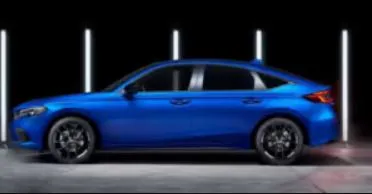
The Honda Civic is the most common car on Canadian roads for a reason, it is cheap to buy, cheap to run, and if you pick the right year, it will outlast your mortgage. But Honda has built over 11 generations of Civics since 1972, and some of them have problems that will make you wish you had bought a Corolla instead.
The great thing about the Civic is that the used market is enormous. You can buy a tenth-generation 2017 with 80,000 km for $15,000, or an eighth-generation 2008 beater for $4,000, and both will probably start tomorrow morning. The bad thing is that the problems vary dramatically by year, engine, and transmission, and if you get it wrong, you are looking at a cracked block or a CVT that sounds like a blender full of marbles.
2006–2009 (8th gen): The cracked block years
The eighth-generation Civic (2006–2011) put the Civic on a pedestal in Canada. The interior was spaceship-weird in the best way, a two-tier dashboard with a digital speedometer floating above the steering wheel. The 1.8-litre R18 engine was smooth and efficient. And for a certain number of owners, the engine block cracked and dumped coolant onto the ground.
The problem was a manufacturing defect in the engine block casting on 2006–2009 Civics with the R18 engine. Coolant would leak through a porous area in the block near the water jacket. Honda issued a warranty extension to 8 years / unlimited kilometres. That extension expired years ago.
How to check: look for coolant residue (white or green crust) on the back of the engine block, below the exhaust manifold. Check the coolant reservoir. If the level is consistently low and there is no obvious leak in the radiator or hoses, the block might be the culprit. A cracked block replacement runs $3,000–4,500 at an independent shop.
The 2006–2009 Civic Si with the K20 engine does not have this problem. The K20 is a different engine family, higher revving, port injected, mechanically unrelated to the R18. If you want an 8th-gen Civic and do not mind premium fuel and a manual transmission, the Si is the safer buy.
Verdict: 2006–2009 with the R18, needs a careful block inspection. If the block has been replaced, the car is fine. Otherwise, the Si is the safer pick. The 2010–2011 (8th-gen refresh) fixed the block casting issue.
2012–2015 (9th gen): The generation Honda would rather forget
The ninth-generation Civic (2012–2015) was a cost-cutting exercise that went badly. Honda admitted it, did an emergency refresh for 2013, and publicly said they had "lost their way." The 2012 in particular is the low point: hard plastics everywhere, a cheap-feeling interior, and road noise that will make you check if a window is open.
The 1.8-litre R18 engine carried over and is mechanically sound, the block issue was resolved by 2010. The problem on the 2012–2013 Civic was the CVT, Honda's first mass-market CVT in a Civic. It drones. It hesitates. The 2014–2015 CVT is better after Honda revised the programming and belt design.
The 2012 Civic Si with the K24 engine and a 6-speed manual is excellent. The K24 pulls hard from low revs, the shifter is Honda-perfect, and the limited-slip differential makes it genuinely fun to drive. A clean 2012–2015 Si with under 120,000 km is worth $14,000–18,000 in Canada.
Verdict: Skip the 2012 entirely. It is the weakest Civic Honda ever built. 2013 is acceptable if cheap. 2014–2015 are fine. The Si from any 9th-gen year is excellent.
2016–2018 (10th gen): The oil dilution sequel
The tenth-generation Civic (2016–2021) introduced the 1.5-litre turbocharged engine (L15B7) that later caused problems in the CR-V. In the Civic, the oil dilution issue is less severe, the engine warms up faster in the smaller, lighter chassis, but it still exists. Canadian owners in cold climates who do short trips in winter will see their oil level rise between changes.
The 2.0-litre naturally aspirated engine (K20C2) in the base LX trim is immune to oil dilution. It is slower, louder, and less efficient than the 1.5T, but it is also the most reliable engine in the tenth-generation lineup. The 2017–2018 Civic hatchback has an additional problem: the rear hatch spoiler is held on with clips that break in cold weather. Check for cracks in the paint around the hatch hinges.
Verdict: The 2.0L LX is bulletproof. The 1.5T is fine if the oil smells clean and the changes were frequent. 2017–2018 are safer than the 2016 first model year.
2019–2021: The sorted years
Honda refined the tenth-generation Civic continuously, and by 2019 the major issues were addressed. The 1.5T's software was updated from the factory. The 2020 hatchback brought a mild styling refresh and standard Honda Sensing on all trims. The 2019–2021 Civic Si is one of the best values in the sport compact market, 1.5T with manual, LSD, adaptive dampers, $22,000–27,000 used.
Verdict: 2019+ tenth-gen Civics are safe buys. The Si is an enthusiast pick that holds value. The 2.0L LX is still the value play.
2022–2024 (11th gen): Too new for meaningful data
The eleventh-generation Civic is Honda's best Civic in years. It is quieter, more refined, and the interior feels like it belongs in an Acura. The 2.0L hybrid debuted for 2023 and is excellent, no turbo, no oil dilution, Prius-rivaling fuel economy. Used 2022–2024 Civics are still expensive ($24,000–34,000) and mostly under factory warranty.
What to check on any used Civic in Canada
- Rust on the rear quarter panels. Every Civic from the 1990s through the 2010s rusts here first. Bubbling paint means the rust is already through the metal.
- CVT fluid condition. The CVT should not whine, shudder, or hesitate. Fluid should be red or reddish-brown, not black.
- A/C performance. The 2006–2011 compressors are the same "Black Death" design as the CR-V. Budget $2,000+ for full overhaul if it makes noise.
- Oil dilution check (2016+ 1.5T). Smell the dipstick. Gas smell = walk. Milky residue on the oil cap = head gasket.
- Clutch feel (Si and Type R). Smooth engagement with no chatter. High engagement point = worn clutch. Budget $1,500–2,200.
The short list
- Best cheap Civic: 2010–2011 8th-gen with the R18 and a 5-speed manual. Under $7,000, reliable if rust-free.
- Best value overall: 2014–2015 9th-gen with CVT (post-update) or 2017–2018 10th-gen 2.0L LX. Both under $16,000.
- Best enthusiast Civic: 2019–2020 Si. Adaptive dampers, LSD, 1.5T, manual only. $22,000–27,000.
- Do not buy: 2006–2008 with the original uncracked block. 2012 LX/DX/EX. Any Civic with a whining CVT and no fluid change history.
Civics are not complicated cars. The good ones are everywhere. The bad ones advertise themselves if you know what to look for. Browse our Honda inventory or get a trade-in quote on yours.