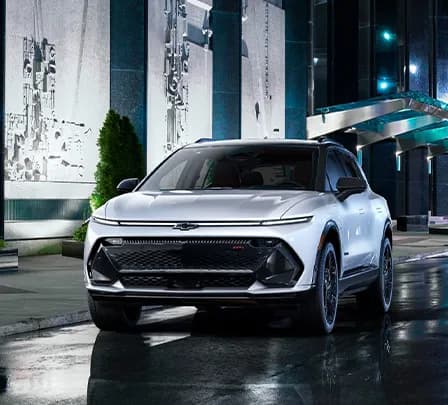
The Hyundai Tucson has gone from a budget also-ran to one of the best-looking crossovers on the road. The current generation turns heads in a way no RAV4 or CR-V does. But Hyundai's rise has not been smooth. The Theta II engine recall was one of the largest in automotive history, and the 7-speed DCT (dual-clutch transmission) in the 1.6T models behaves more like a manual transmission than most buyers expect. If you know what you are getting into, the Tucson can be an excellent value. If you do not, you might end up with an engine that seizes on the 401.
2011–2014: The Theta II years
The 2011–2014 Tucson used Hyundai's 2.0-litre and 2.4-litre Theta II engines, which are the subject of a massive recall. The problem: metal debris left in the engine during manufacturing would restrict oil flow to the connecting rod bearings, causing the bearings to fail and the engine to seize. Hyundai recalled millions of vehicles across multiple models and extended the engine warranty to 10 years / 200,000 km for affected vehicles. Some 2011–2014 Tucsons are now outside that extension.
Hyundai also settled a class-action lawsuit in Canada covering engine replacement and related costs. If the engine in a 2011–2014 Tucson has been replaced under the recall with a new unit, the car is fine. The replacement engines do not have the manufacturing defect. If the engine is original, you are gambling on a known defect that can total the vehicle.
How to check: run the VIN through Hyundai Canada's recall lookup. If the engine was replaced, there should be documentation. Also check the oil — if it smells like gasoline or has a metallic sheen, the bearings are wearing. A cold start knock that lasts more than a second is a bad sign.
Verdict: Only buy a 2011–2014 Tucson if you can verify the engine was replaced under the recall. No replacement proof = do not buy. The rest of the vehicle is unremarkable but functional.
2015–2016: New generation, same engine concerns
The 2015 Tucson was the last year of the second generation, and it still used the Theta II 2.4L engine. The same recall applies. The 2016 launched the third generation with a new platform and a new 1.6-litre turbocharged engine (Gamma) paired with Hyundai's first 7-speed dry dual-clutch transmission (DCT).
The 1.6T engine itself is not part of the Theta II recall. It has been reliable in Canadian service. The DCT is the conversation piece. A dry DCT does not have a torque converter — it has clutches that engage like a manual transmission. At low speeds, especially in stop-and-go traffic, it can be jerky. It will hesitate from a stop, then lurch forward when the clutch engages. This is normal behaviour for a dry DCT — it drives like a manual transmission that someone else is shifting for you, and that someone is not always smooth.
Hyundai improved the DCT programming over time, but the fundamental behaviour is inherent to the design. If you test drive a 2016–2018 Tucson with the 1.6T and DCT, do it in stop-and-go traffic, not on an empty highway. If the jerkiness bothers you, the 2.0L with the conventional 6-speed automatic is the alternative. It is slower but smoother.
Verdict: 2016 with the 2.0L and 6-speed automatic is the safer choice. The 1.6T DCT is fine if you are okay with how a DCT drives — test it in traffic before deciding.
2017–2018: The DCT improves, the engine recall expands
Hyundai expanded the Theta II recall to cover additional 2017–2018 Tucsons with the 2.0L and 2.4L engines. The same rules apply — check the VIN, verify any engine replacement. The 1.6T DCT got software updates that smoothed out some of the low-speed jerkiness. It is still not as smooth as a conventional automatic, but it is better than the 2016.
The 2017 Tucson also introduced the Night Edition and other appearance packages that make it look more expensive than it is. The value proposition at used prices ($12,000–18,000 for a 2017–2018) is strong — you get a lot of features for the money compared to a same-year RAV4 or CR-V.
Verdict: 2017–2018 1.6T with the updated DCT software is acceptable. The 2.0L engine is either part of the recall or not — verify by VIN. If the engine was replaced, the car is a good value.
2019–2021: The safe zone
The 2019 Tucson refresh brought a revised front end, a new 2.4-litre engine (Theta III, not affected by the Theta II recall), and Hyundai's 8-speed conventional automatic on some trims. The 8-speed is vastly smoother than the DCT and has no known issues. The Theta III 2.4L has not been subject to the same recall as the Theta II and has been reliable in the Tucson and Santa Fe.
The 2020–2021 Tucsons are the best of the third generation. The DCT programming is as refined as it gets, the engines are sorted, and the feature set for the money is excellent — ventilated seats, a panoramic sunroof, and a 360-degree camera in the Ultimate trim for under $25,000 used.
Verdict: 2019–2021 are safe buys. The 2020–2021 Ultimate trim with the 2.4L and 8-speed automatic is the best used Tucson under $25,000.
2022–2024: The head-turner
The fourth-generation Tucson (2022–present) looks like a concept car that accidentally made it to production. The angular LED running lights integrated into the grille, the sharp body lines — it does not look like anything else in the segment. The interior is a significant step up, with a large screen, capacitive-touch controls, and genuinely premium materials in higher trims.
The 2022 introduced the Tucson Hybrid and Plug-in Hybrid, using Hyundai's 1.6T paired with an electric motor and a conventional 6-speed automatic — not a DCT. The hybrid system is smooth and efficient (about 6.5 L/100 km combined) and has Hyundai's 10-year / 200,000 km hybrid battery warranty. The 2022–2024 Tucsons are still mostly under factory warranty and too new for long-term reliability data.
Verdict: 2022+ are excellent but expensive. The Hybrid is the pick — smooth powertrain, great fuel economy, long warranty. $30,000–42,000 used.
The short list
- Best cheap Tucson: 2016 with the 2.0L and 6-speed automatic. No DCT, no Theta II recall. $10,000–14,000.
- Best value overall: 2020–2021 Ultimate with the 2.4L and 8-speed automatic. Loaded with features, no engine issues. $20,000–25,000.
- Best modern Tucson: 2022+ Hybrid. Smooth, efficient, long warranty. $32,000–40,000.
- Do not buy: 2011–2015 with original Theta II engine and no replacement proof. 2016 1.6T DCT if you have not test-driven a DCT in traffic.
The Tucson is one of the best values in the used crossover market if you avoid the Theta II engines and understand the DCT's quirks. Hyundai's warranty and recent quality improvements make the newer models genuinely competitive with Toyota and Honda. Browse our Hyundai inventory or get a trade-in quote.