Every month we inspect used EVs at our lot in Richmond Hill and run every battery through a full AVILOO diagnostic. After a while, patterns start showing up. Some are obvious. Some are surprising. All of them matter if you are buying or selling.
What we saw on the lot in June 2026:
The headline: Tesla prices are coming down, but not because of the cars
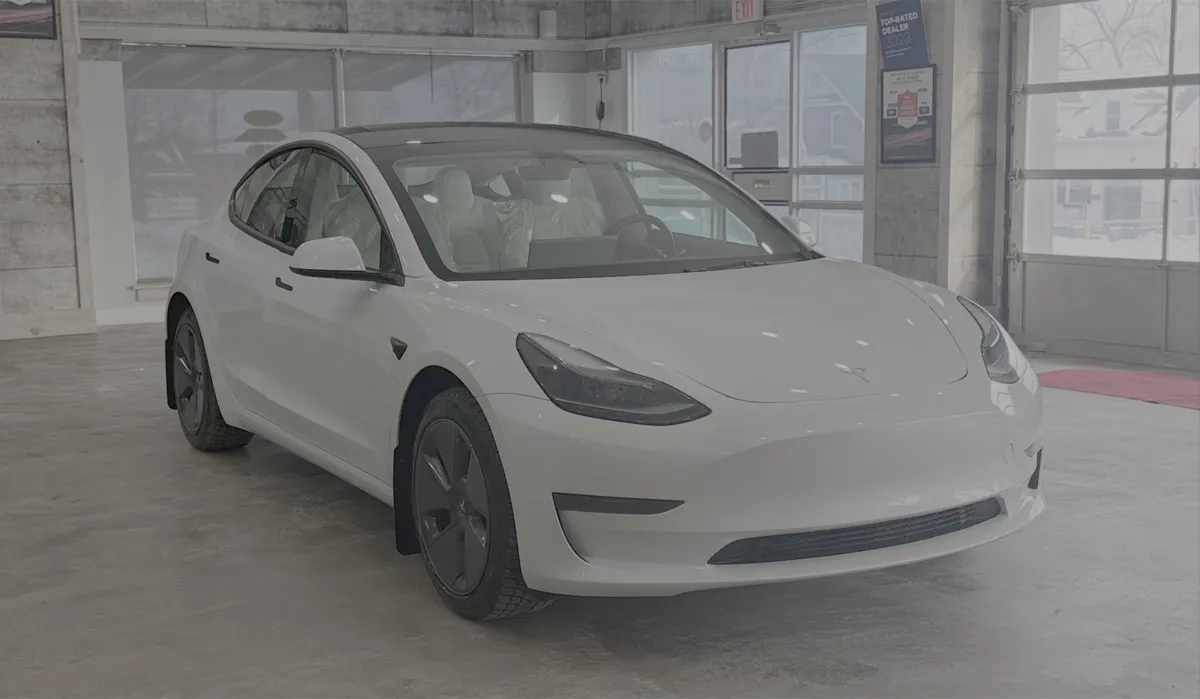
The average listing price for a used Tesla Model 3 in Ontario dropped about 12% over the last six months. A 2021 Long Range that was listed at $43,000 in December is now showing up at $37,000-39,000. A 2020 Standard Range Plus that was $34,000 is now $29,000-31,000.
The cars did not get worse. The market got more supply. Hertz dumped a chunk of their EV fleet, lease returns from 2022-2023 are flooding in, and Tesla themselves cut new Model 3 prices twice in the last year, which pulls down used values.
Off-lease cars often have better-than-average battery health. Lease returns tend to be charged at home by people who followed the 80% daily charge recommendation because they were not going to own the car long enough to care about squeezing out every kilometre. The Hertz cars are a different story. Those were supercharged hard and it shows in the diagnostics. We passed on three ex-rental Model 3s this month because the AVILOO scores came back below 82.
If you are shopping, the best deals right now are 2020-2021 Model 3 Long Range units coming off four-year leases. The battery scores we are seeing on those are 88-92 on average, which is solid for a 60,000-90,000 km car. At $35,000-39,000 with three years of battery warranty remaining, the value is better than it was last year.
Hyundai and Kia EVs are holding value differently than we expected
The Ioniq 5 and EV6 were supposed to depreciate like any other Korean car. They have not. A 2023 Ioniq 5 Preferred Long Range with 40,000 km is still trading hands at $42,000-47,000, which is only about 15-18% off its original MSRP. That is Tesla-like residual performance from a brand that historically loses 30% in year one.
Why? Supply. Hyundai and Kia did not make enough of them. Battery health on the E-GMP platform cars (Ioniq 5, Ioniq 6, EV6, EV9) is excellent. The 800V architecture means they charge fast and run cool, which is easier on the battery long term. We are seeing 95-97% state of health on 2023 units, which is about as close to new as a used battery gets. The Ioniq 5 in particular is the one non-Tesla EV we recommend without hesitation.
The Bolt is the sleeper deal nobody is paying attention to
Chevrolet Bolts from 2022-2023 are trading in the low-to-mid $20,000s with 30,000-50,000 km. That is a 259-417 km EV with a battery that was probably replaced under the recall (GM replaced every Bolt battery between 2021-2023, so most used Bolts have a battery that is newer than the car). The Bolt is not exciting. The seats are narrow. The fast-charging speed is capped at 55 kW. But if you have a garage and a Level 2 charger and your daily drive is under 150 km, a $23,000 Bolt with a fresh battery is the cheapest reliable EV you can buy in Canada right now.
Supercharging vs home charging: the data is getting clearer
We have now run AVILOO diagnostics on over 200 used EVs since the start of 2025, and the pattern is consistent enough to talk about. Cars that were predominantly home-charged to 80-90% on Level 2 show average degradation of 6-7% at 80,000 km. Cars that were predominantly supercharged show average degradation of 12-14% at the same mileage. That gap, about 6-8 percentage points, represents roughly 30-50 km of lost real-world range.
The data also shows that the depth of charge matters more than the charging method. A car supercharged from 20% to 80% once a week and home-charged otherwise will have a healthier battery than a car that sat at 100% every night on a Level 2 charger. The battery does not like sitting full. For buyers, this means asking the seller about charging habits is almost as important as seeing the diagnostic report. "I charged to 80% at home" is the best answer. "I supercharged to 100% because I didn't have home charging" is the honest answer that should make you negotiate harder.
What we are watching for the rest of 2026
Federal EV rebate uncertainty. If the $5,000 federal rebate disappears, new EV prices effectively go up by $5,000 overnight, which will push more buyers to the used market and likely lift used EV prices by 5-8%.
More lease returns incoming. The 2022-2023 EV buying wave is about to become the 2026-2027 lease return wave. More supply of three-to-four-year-old Teslas, Ioniq 5s, and EV6s hitting the market starting late 2026. If you are not in a rush, waiting six months might save you a few thousand dollars.
Winter is coming. Used EV prices dip in August-September as dealers try to clear inventory before the winter slowdown. Buy in August. Sell in April. The seasonal pattern in Canada is predictable enough to plan around.
LFP batteries are changing the used market dynamics. A 2023 Model 3 Standard Range with an LFP pack at 8% degradation is an outlier. Most are under 5%. As more LFP cars enter the used market, the "standard range" label stops meaning "shorter lifespan" and starts meaning "cheaper, simpler, and nearly as durable."
Where that leaves buyers
If you are buying a used EV in Canada right now, the market is better for buyers than it was a year ago. More supply, more warranty remaining on off-lease cars, and better tools for measuring what you are actually buying. The AVILOO report is the difference between informed and guessing. If the seller cannot produce one, the price is a guess too. Browse our current EV inventory to see what is available now with full AVILOO reports on every listing.