The first question every Ontario EV buyer asks after range is: "Can I charge at home?" The answer is almost always yes. The second question is whether you need to spend $2,500 on a wall charger. Often, you do not — at least not on day one.
Level 1: the cord in the trunk
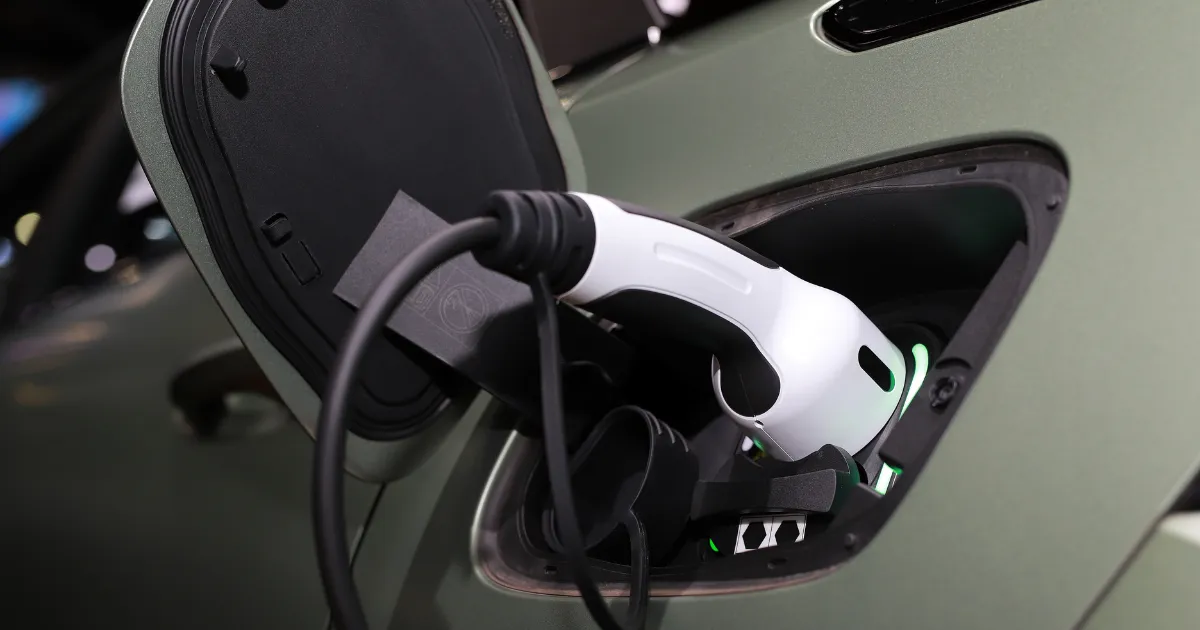
Every EV ships with a portable Level 1 charger that plugs into a standard 120V outlet. On a dedicated 15-amp circuit, you add roughly 5–8 km of range per hour. Plug in at 6 p.m., leave at 7 a.m., and you recover 65–110 km overnight.
For GTA commuters driving 40–60 km per day, Level 1 works. We have customers on Level 1 for their first year while they decide on a permanent install. The car does not care — slow charging is gentler on the battery than fast DC charging every day.
Level 2: when it makes sense
Level 2 uses a 240V circuit (same as a dryer) and delivers 30–50 km of range per hour on most home units. Full overnight charge on a Long Range Tesla or similar takes 8–10 hours instead of two days on Level 1.
Level 2 is worth it if:
- You drive more than 80 km daily
- You share the car and cannot guarantee 12+ hours on the Level 1 cord
- You want pre-conditioning on wall power in winter (saves battery range every morning)
- Your utility offers off-peak rates and you want to schedule charging for midnight–6 a.m.
Real install costs in the GTA (2026)
Quotes we hear from customers and partner electricians in Richmond Hill, Vaughan, and Toronto:
- Simple install (panel has spare 240V breaker, charger near panel): $800–1,400 for labour + permit
- Moderate run (garage opposite wall from panel, 10–15 m conduit): $1,400–2,200
- Panel upgrade (100A → 200A service): $2,500–4,500 depending on utility and ESA inspection
Hardware: a decent 40–48A home charger runs $600–900 before install. Tesla Wall Connector, ChargePoint Home Flex, and Grizzl-E are common choices. Buy the unit that matches your car's max AC charge rate — a Model 3 on a 48A circuit accepts up to 11.5 kW; a base Leaf may cap at 6.6 kW.
Condo and rental realities
Ontario condominiums must allow EV charging requests under updated rules, but timelines vary. Expect 3–12 months for board approval and metering setup in older buildings. Renters should confirm outlet access and landlord permission — Level 1 on a dedicated outdoor outlet may be the only option short term.
Before you buy the car
Walk your garage. Locate your panel. Count open breaker slots. If you are unsure, an electrician's 30-minute assessment ($100–150) beats buying an EV and discovering you need a $4,000 service upgrade. We help buyers plan charging during delivery — ask us what other customers in your postal code did.
Shop this topic
Ready to act on what you read? Start with these Planet Motors pages.